Skip to content
Spyglass Direct Cholangioscopy

Procedure

Spyglass Direct Cholangioscopy

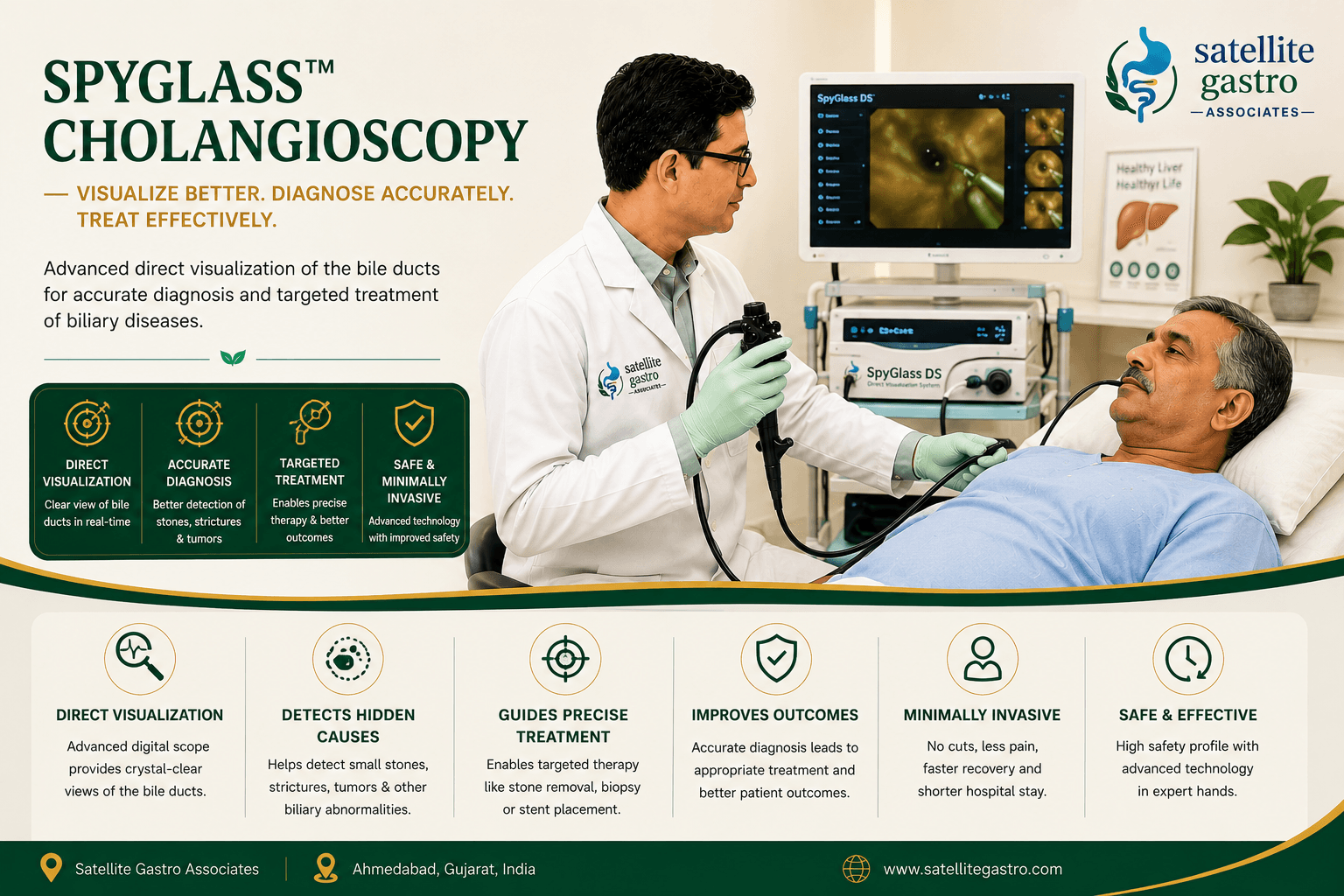
A miniature scope passed through the working channel of an ERCP scope to directly visualise the inside of the bile duct. Used for difficult stones, suspicious strictures, and targeted biopsies.

What is it?

Spyglass is a single-operator cholangioscopy system. A tiny camera enters the bile duct itself, giving a direct view that ERCP X-ray cannot.

It allows precise biopsy of suspicious strictures and treatment of stones that are too large for standard removal.
Who needs it?

  • Bile duct stones that cannot be removed by standard ERCP.
  • Indeterminate biliary strictures where the cause is unclear from imaging alone.
  • Selected cases of intrahepatic stones.

How it works

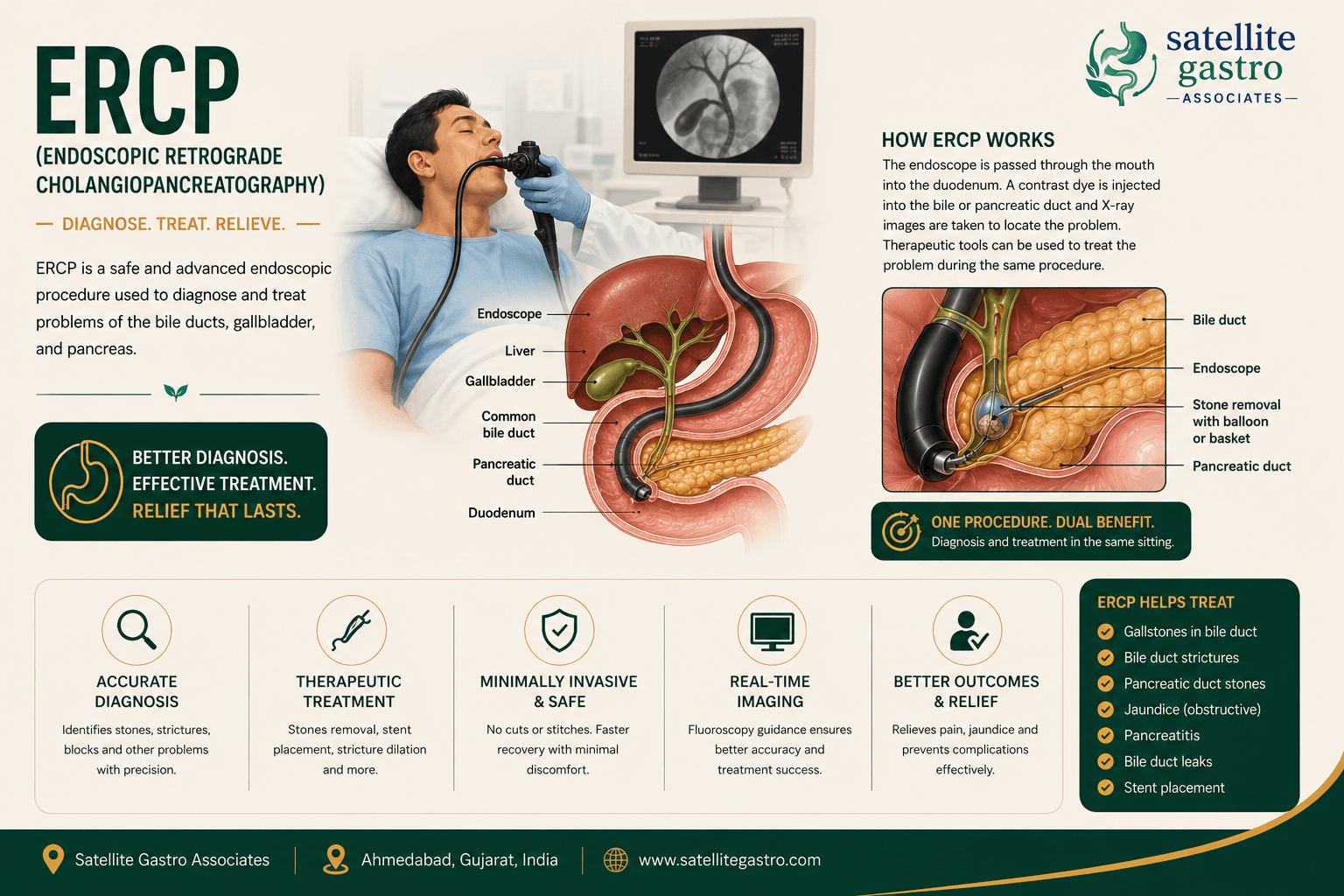
Performed as part of an ERCP, under sedation or general anaesthesia.

The mini-scope is inserted through the ERCP scope and advanced into the bile duct.

Stones are fragmented with laser or electrohydraulic lithotripsy. Biopsies are taken from suspicious areas.

Preparation

  • Same as ERCP. No food for 6 hours before.

Recovery

  • Observation for several hours after, as with ERCP.

Risks

All endoscopic procedures carry a small risk of bleeding, perforation, or reaction to sedation. These risks are uncommon when the procedure is done by a trained endoscopist in a hospital setting.

We will explain the risks specific to your case during the consultation, before you sign consent.

Common questions

Things patients ask us.

When is Spyglass needed?

When stones are unusually large, when a stricture cannot be diagnosed by other means, or when intrahepatic disease needs targeted treatment.