Skip to content
Endoscopic Ultrasound

EUS

Endoscopic Ultrasound

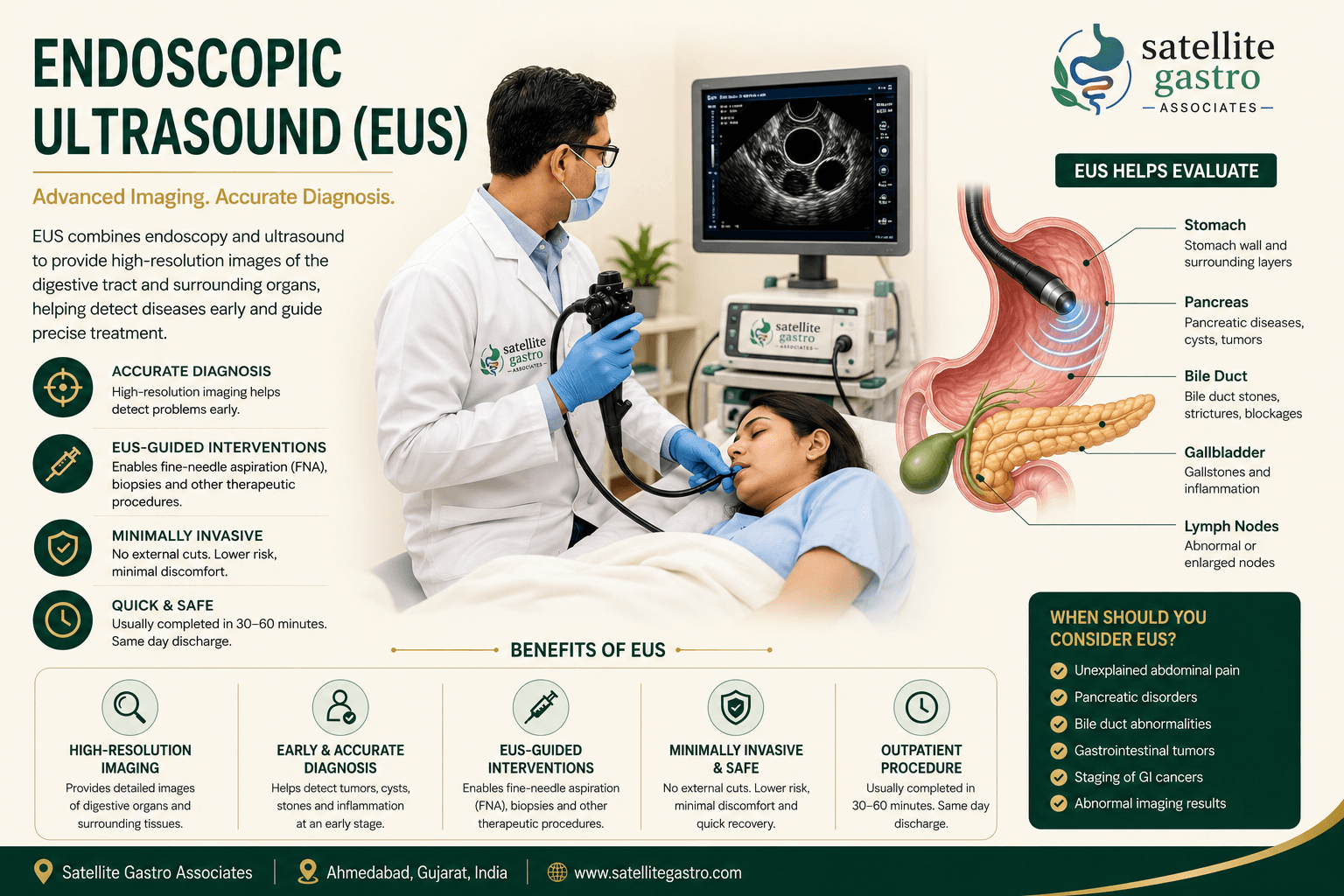
Combines endoscopy with ultrasound to image organs adjacent to the digestive tract. Particularly valuable for pancreatic evaluation, lymph node sampling, and staging certain cancers.

What is it?

EUS places a tiny ultrasound probe at the tip of an endoscope, giving close-range, high-resolution images of structures next to the gut wall.

It is the test of choice for the pancreas, the deep layers of the gut wall, and small lesions that are difficult to see on a CT scan.
Who needs it?

  • Suspected pancreatic mass or cyst.
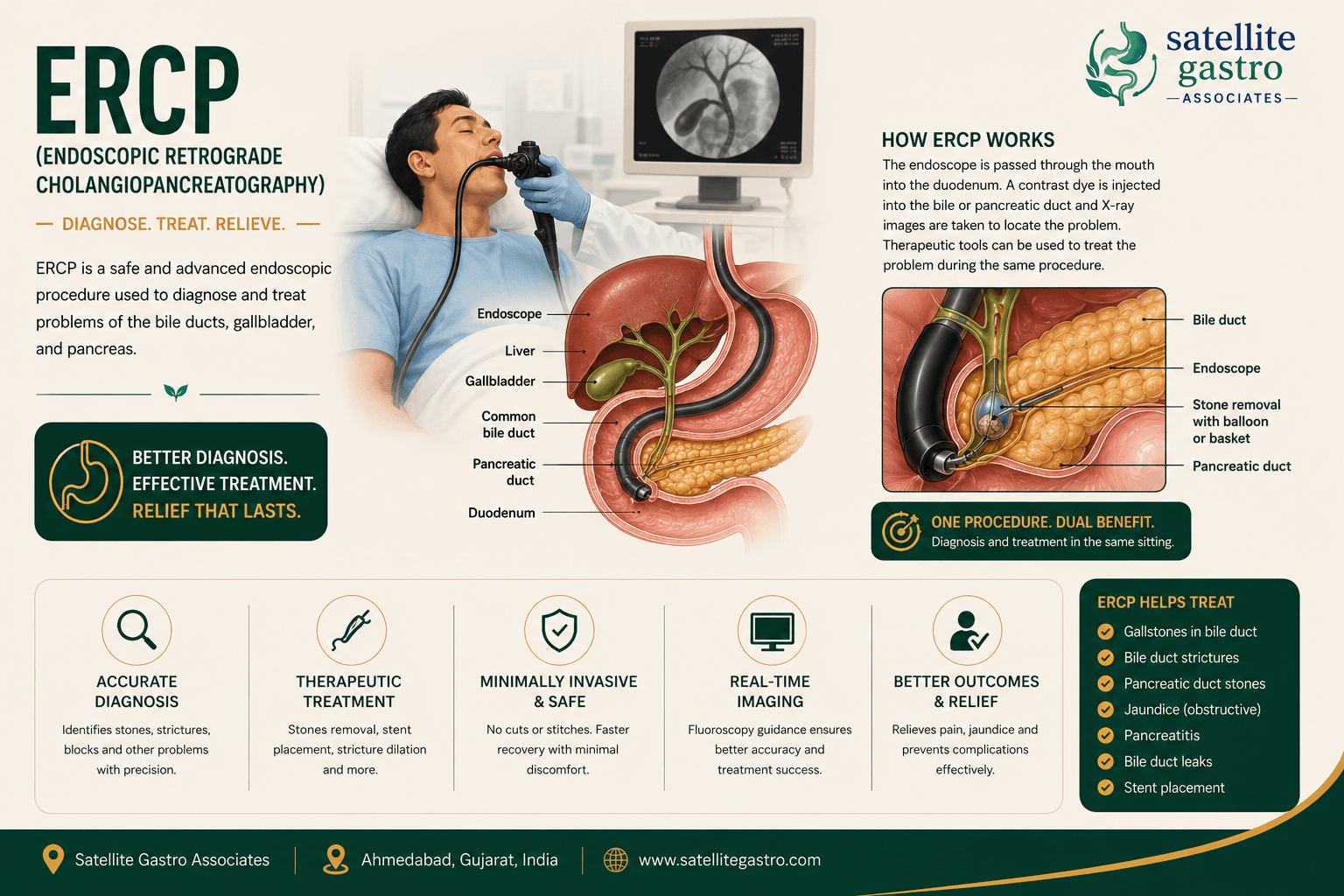
  • Evaluation of bile duct narrowing when ERCP is not enough.
  • Staging of oesophageal, gastric, or pancreatic cancer.
  • Sampling of enlarged lymph nodes in the chest or abdomen.

How it works

Performed under sedation, like an upper endoscopy.

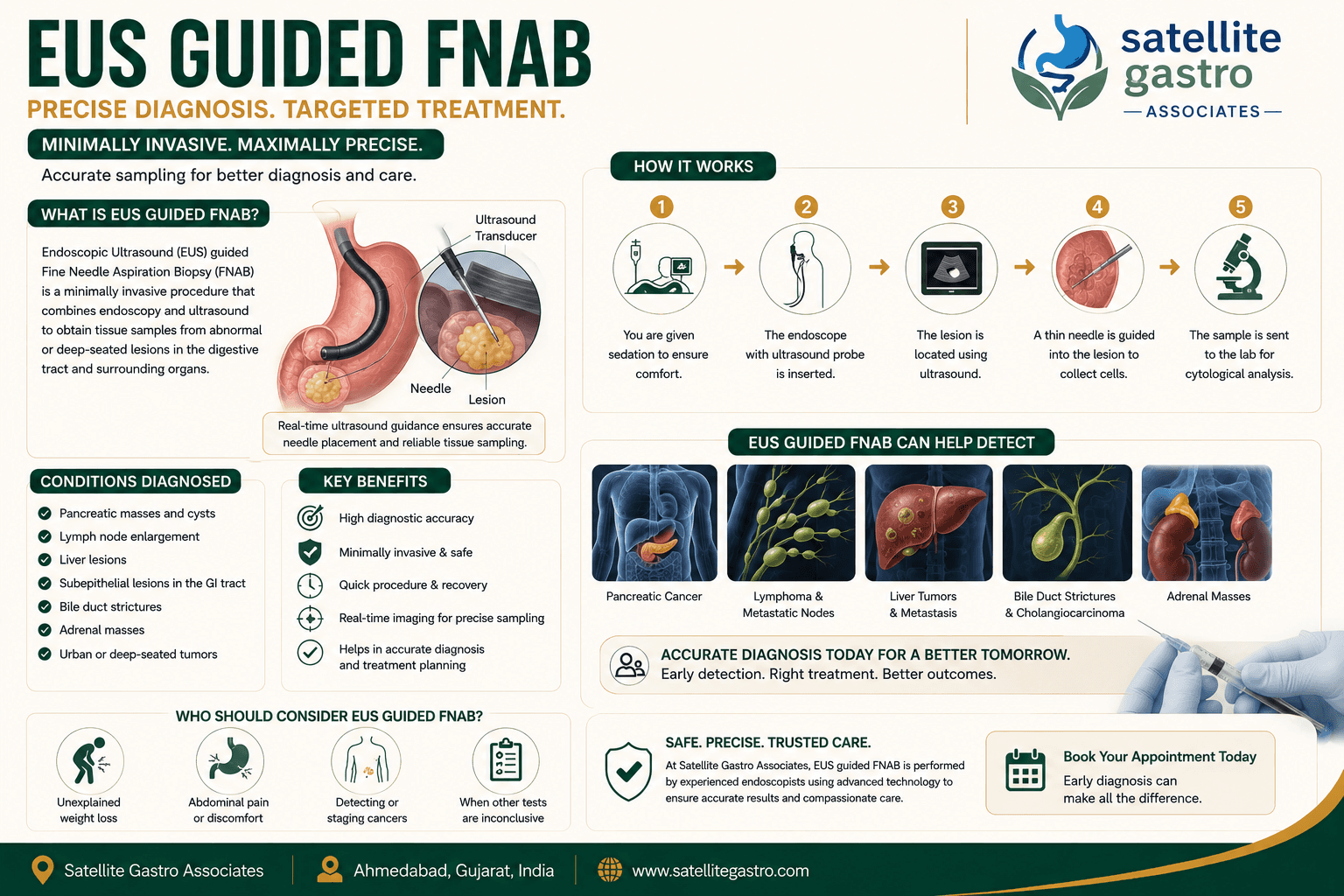
When a target lesion is identified, a thin needle (FNAB) can be passed through the scope to take a tissue sample.

Therapeutic EUS can drain pancreatic fluid collections or create a route to the bile duct when conventional ERCP is not possible.

Preparation

  • No food for 6 hours before.
  • Blood thinners may need to be stopped if a biopsy is planned.

Recovery

  • Similar to upper endoscopy. Go home the same day in most cases.

Risks

All endoscopic procedures carry a small risk of bleeding, perforation, or reaction to sedation. These risks are uncommon when the procedure is done by a trained endoscopist in a hospital setting.

We will explain the risks specific to your case during the consultation, before you sign consent.

Common questions

Things patients ask us.

How is EUS different from CT or MRI?

EUS gets closer to the target, so it can see smaller and deeper details, and it allows sampling in the same sitting.