Skip to content
Fibroscan Liver Stiffness and Steatosis Assessment

Procedure

Fibroscan Liver Stiffness and Steatosis Assessment

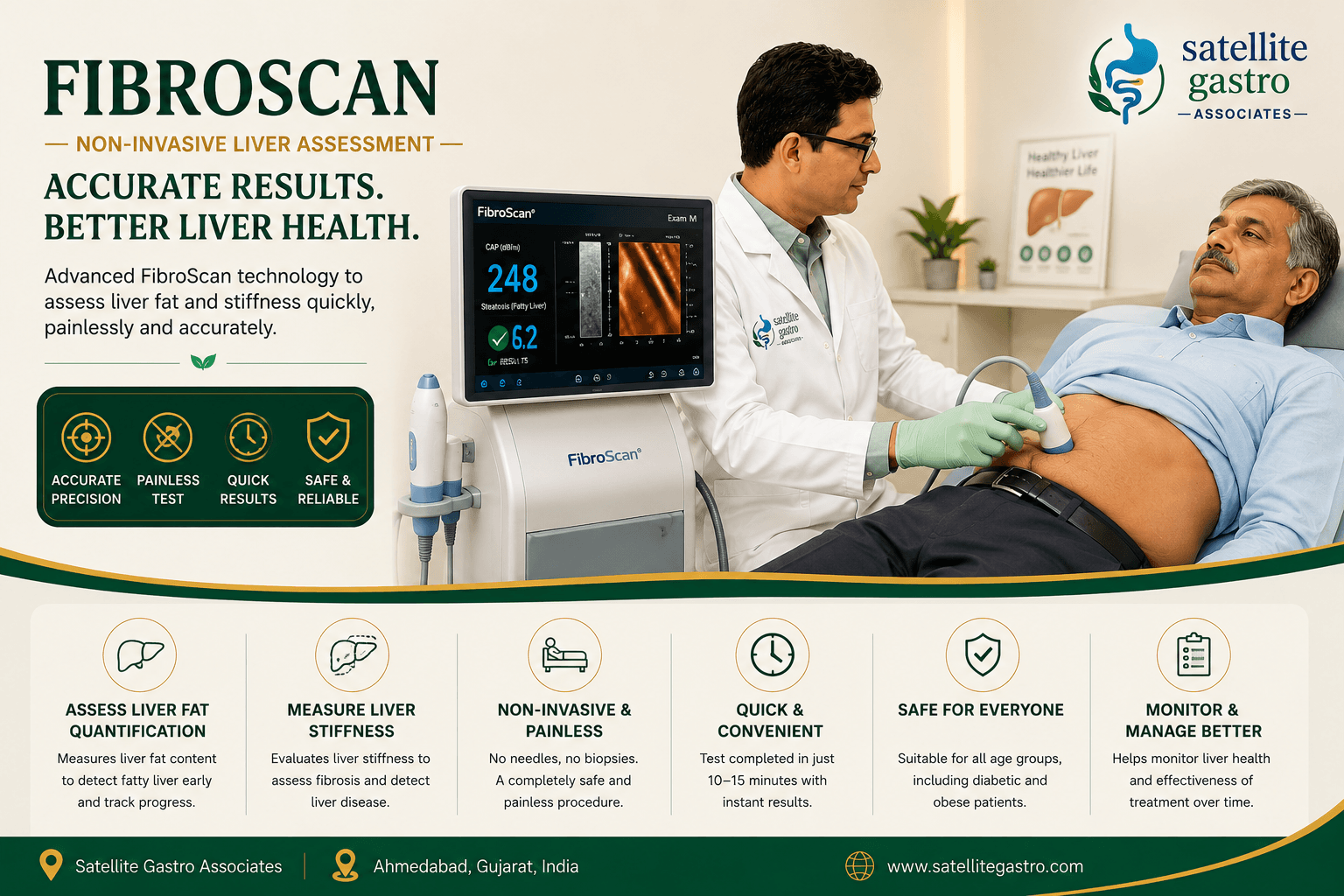
A painless ultrasound-based test to measure liver stiffness (fibrosis) and fat content (steatosis). Replaces many liver biopsies. Used for fatty liver, hepatitis, and post-treatment monitoring.

What is it?

Fibroscan uses a controlled vibration sent through the skin to measure how stiff the liver is. Stiffer livers indicate more fibrosis (scarring).

The same probe also measures fat content (CAP, controlled attenuation parameter), which helps diagnose and monitor fatty liver disease.

Who needs it?

  • Fatty liver disease (NAFLD or NASH) at any stage.
  • Hepatitis B or C, before and after treatment.
  • Alcohol-related liver disease.
  • Anyone with abnormal liver function tests of unclear cause.

How it works

You will lie on your back with the right arm raised behind the head.

A probe is placed between the ribs on the right side. Ten measurements are taken automatically.

The whole test takes 10 to 15 minutes. There is no pain and no sedation.

Preparation

  • Fast for 3 hours before the test to improve accuracy.

Recovery

  • You can leave immediately. There are no restrictions.

Risks

No risks. The test is entirely non-invasive.

Common questions

Things patients ask us.

Does this replace a liver biopsy?

For most patients with fatty liver and viral hepatitis, yes. A biopsy is still needed in selected cases.

How often should I repeat it?

Usually every 1 to 2 years for monitoring, more often if your doctor is tracking response to treatment.

Next step

Speak with a consultant about Fibroscan.

Locale: gu