Skip to content
Endoscopic Weight Loss Treatment

Procedure

Endoscopic Weight Loss Treatment

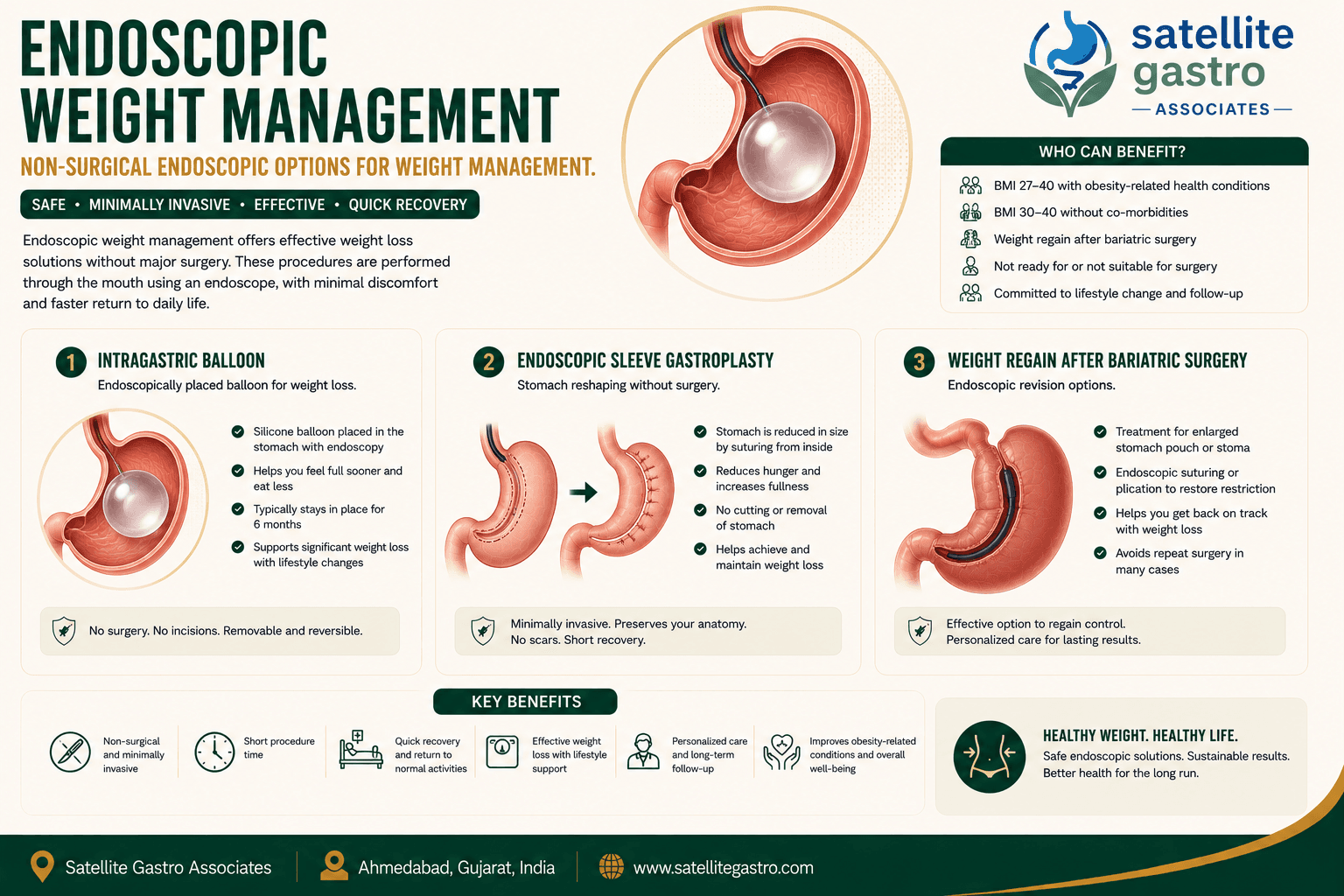
Non-surgical, endoscopic weight management: intragastric balloon placement and endoscopic sleeve gastroplasty (ESG). No external incision, and reversible options are discussed with the doctor at consultation.

What is it?

Bariatric endoscopy is a group of weight-management procedures performed entirely through an endoscope, without abdominal surgery. The two main options at the clinic are the intragastric balloon and endoscopic sleeve gastroplasty.

An intragastric balloon is a soft, saline-filled balloon placed inside the stomach for a fixed period (typically six months) to reduce stomach capacity and slow gastric emptying. ESG uses endoscopic sutures to reshape the stomach into a narrower tube, similar in concept to surgical sleeve gastrectomy but without external incisions and without removing any stomach tissue.
Who needs it?

  • Adults with significant excess weight who have not achieved results with medical and lifestyle measures alone.
  • Patients who prefer a less invasive option than bariatric surgery.
  • Patients who want a reversible or staged approach to weight loss.
  • Eligibility is decided after a detailed consultation, including BMI, related conditions and lifestyle assessment.

How it works

Performed under sedation or short general anaesthesia.

For intragastric balloon: the balloon is passed through the mouth and filled with saline inside the stomach.

For ESG: rows of endoscopic sutures are placed to fold and shorten the stomach into a sleeve shape.

Both procedures are followed by a structured dietary and exercise programme with regular follow-up.

Preparation

  • Pre-procedure consultation, blood work, and dietitian discussion.
  • No food for 6 hours before the procedure.

Recovery

  • Liquid diet for the first week, gradual transition to soft and then regular diet over a few weeks.
  • Mild nausea and abdominal cramps are common in the first few days and settle with medication.
  • Most patients return to office work within a week.

Risks

Nausea, vomiting and reflux are common in the first few days and usually settle.

Less common risks include dehydration, balloon-related ulcer or, very rarely, perforation. These are discussed in detail before consent.

Common questions

Things patients ask us.

Is the result permanent?

Weight outcomes depend on sustained lifestyle change after the procedure. Without changes in diet and activity, weight regain is possible.

Is the balloon removable?

Yes. The intragastric balloon is removed endoscopically at the end of its placement period.